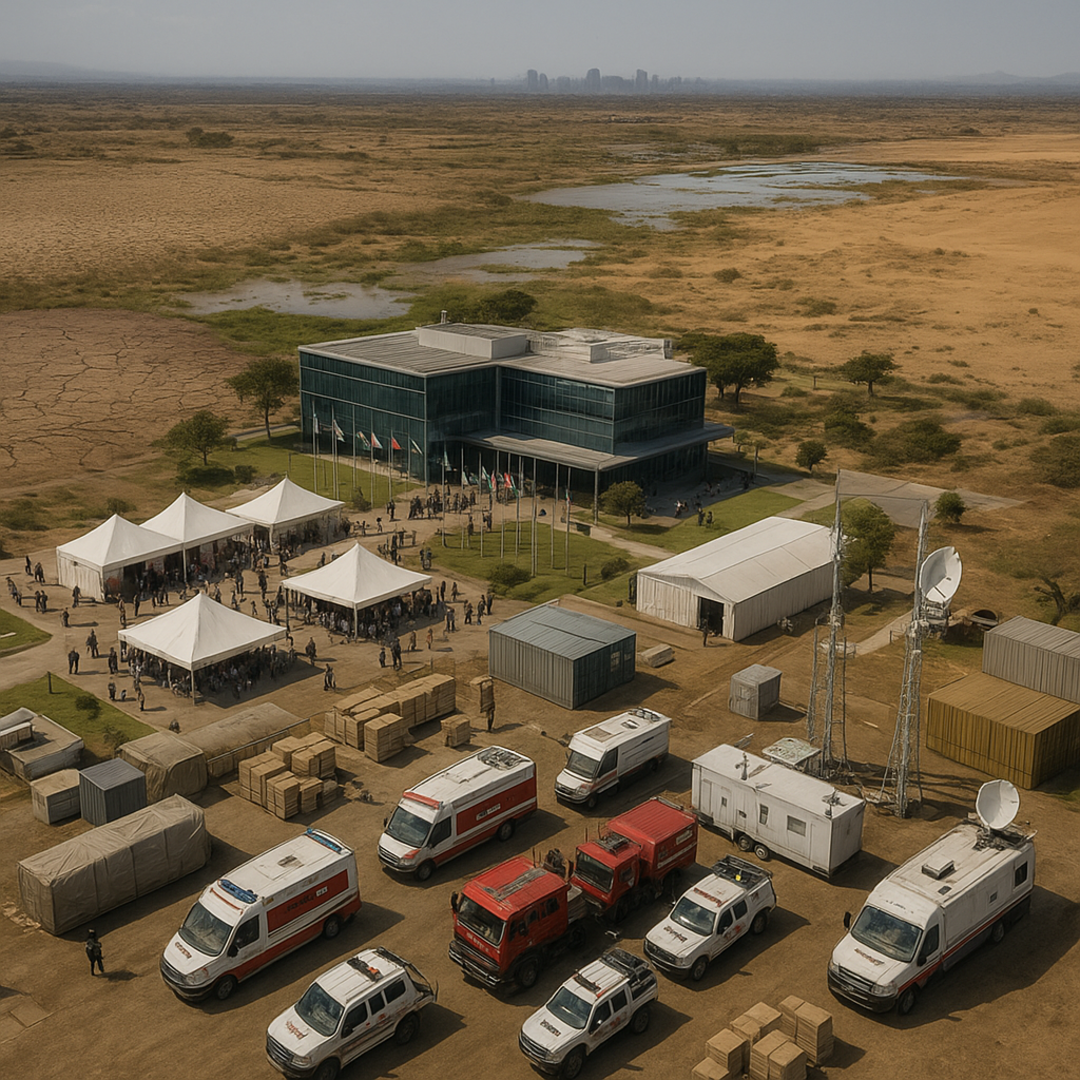
HARGEISA – The Ministry of Resettlement and Humanitarian Affairs in Somaliland commenced today in Hargeisa an extensive relief initiative for hundreds of displaced families at new resettlement locations, forming part of a broad national plan focused on enhancing living conditions for the most at-risk communities, according to ministry officials.
The initiative involved providing comprehensive food aid to 450 families who had recently moved to their own properties. H.E. Suleiman Dualeh Haji Jama, Minister of Resettlement and Humanitarian Affairs, oversaw the distribution, reaffirming the government’s dedication to establishing the foundations of a dignified existence for all inhabitants.
These activities paralleled another humanitarian program executed by the Ministry in partnership with the United Nations High Commissioner for Refugees (UNHCR), which provided non-food items (NFIs) to 400 families at the Naaso Hablood A camp, an effort designed to promote household stability and enhance living conditions in the newly established official communities.
The field operations were joined by a senior delegation comprising Mr. Mukhtar Abdi Jama Baaxo, Ministry Director General, the Minister of Health Development, and the National Food Reserve Agency Chair, accompanied by local officials from Hargeisa region and Ahmed Maalin Harun district to ensure optimal coordination.
The support delivered through international collaboration featured essential supplies including solar lighting equipment, cooking tools, blankets, construction materials, bedding, and vital household items, all contributing to improved daily living standards for the recipient families.
Throughout the field visits, officials engaged with residents at the resettlement locations to hear their fundamental needs and evaluate changes in living standards between former and current residences, highlighting that the relocation primarily seeks to enable families to establish themselves in secure and stable territories.
Authorities commended the strong collaboration between the Ministry and UNHCR, viewing this strategic alliance as a successful framework for integrated humanitarian efforts that merge government backing with international proficiency to address increasing requirements of local and displaced populations.
The Ministry emphasized that this aid represents more than emergency relief, serving as an integral component of a holistic development strategy targeting improvements in essential services like water, education, and healthcare within new resettlement zones, ensuring the sustainable inclusion of displaced individuals.
The Minister confirmed in his remarks that the government will persist in strengthening relief measures and pursuing sustainable solutions for displacement challenges, indicating that infrastructure development is progressing in these regions to create surroundings favorable for advancement and community well-being.
The events concluded by underscoring the ongoing nature of humanitarian interventions in collaboration with global and local organizations, concentrating on enhancing family capabilities to foster self-sufficiency and reinforcing legal frameworks to guarantee a promising and protected future for everyone.
These extensive humanitarian initiatives in Hargeisa demonstrate a steadfast political and ethical dedication toward constructing a resilient society equipped to address displacement obstacles. Through combining food assistance with logistical capacity-building, the nation establishes groundwork for a future where displaced individuals evolve from aid dependents to active participants in national development, within a framework that safeguards their rights and maintains their human dignity as an inviolable fundamental principle.