Somalia experienced a rapidly worsening food security crisis between April and June 2025, with approximately 4.6 million people suffering from acute hunger. Recent Integrated Food Security Phase Classification (IPC) analysis revealed that 784,000 people were in IPC Phase 4 (Emergency) and nearly 3.8 million in IPC Phase 3 (Crisis), representing a substantial increase from previous forecasts. Acute malnutrition rates also escalated significantly, affecting 1.8 million children under five who required immediate medical care. These deteriorating statistics highlighted the severe consequences of extended drought, conflict, and economic challenges, exacerbated by substantial cuts in humanitarian aid.
By 5 August 2025, UNOCHA documented severe drought conditions across several regions, especially in Mudug, Nugaal, Bari, Awdal, Woqooyi Galbeed, and Sanaag. About 2.5 million people resided in moderately or severely affected regions spanning 26 districts, with 887,000 individuals in particularly affected areas across 16 districts. The Humanitarian Country Team recently adjusted priorities for five districtsZeylac, Lughaye, Bossaso, Galkacyo, and Hobyoto synchronize with existing programs after significant funding reductions.
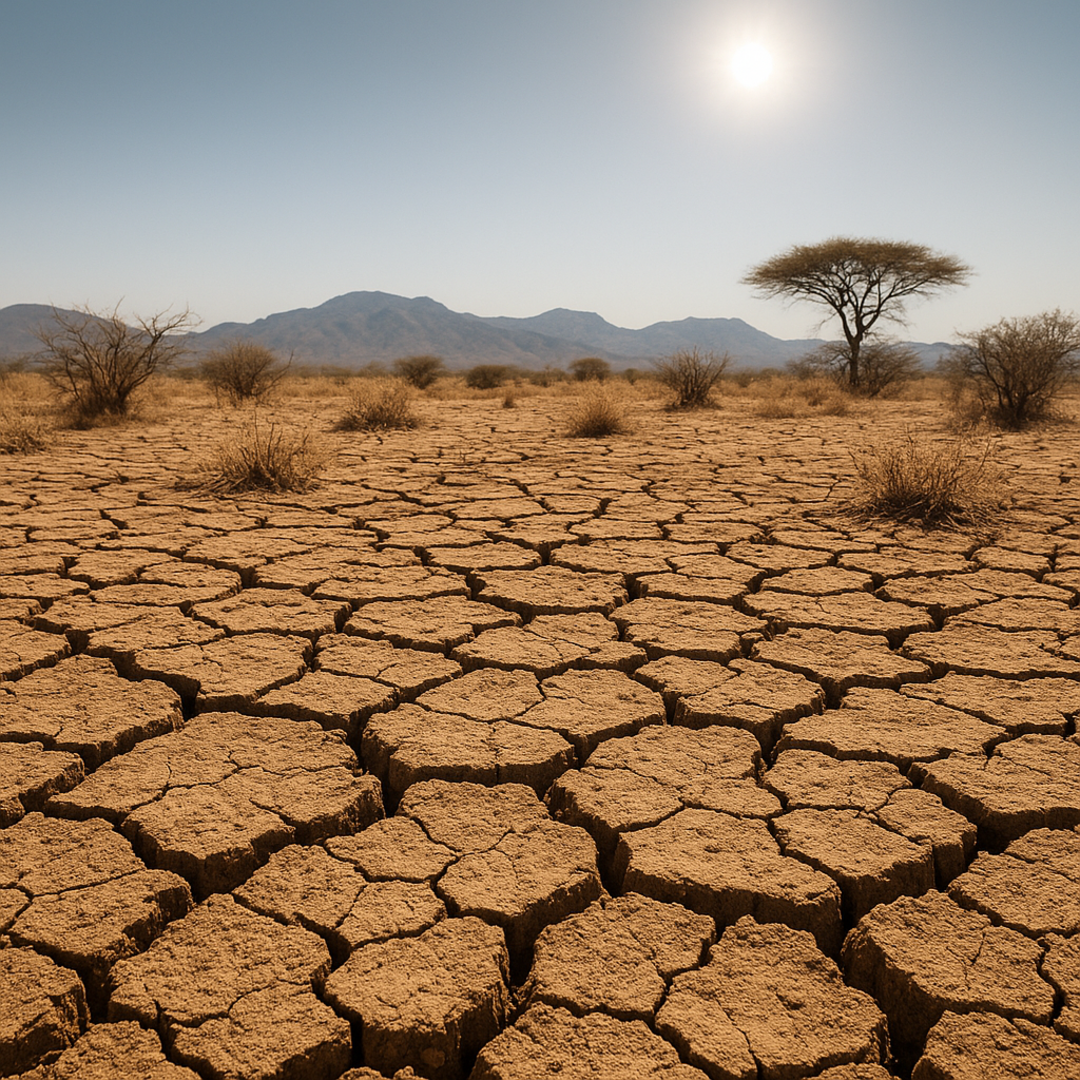
Somaliland suffered through consecutive unsuccessful Gu and Deyr rainy seasons, creating one of the most severe droughts in recent memory. This caused extensive water source depletion, crop failures, and significant livestock losses among pastoral and agro-pastoral communities. The National Disaster Preparedness and Food Reserve Authority (NADFOR) calculated that 810,000 people were severely impacted, with forecasts indicating potential escalation to 1.2 million if the situation continued. The President responded by declaring a drought emergency on 22 July 2025, then established a 15-member National Drought Response Committee on 23 July 2025, led by the Vice President to coordinate assistance efforts and gather resources in cooperation with government departments, local administrations, humanitarian organizations, and international entities.
Puntland’s Ministry of Humanitarian Affairs and Disaster Management (MoHADM) released an urgent humanitarian appeal on 31 July 2025 due to the intensifying drought situation. Unsuccessful Gu and Deyr rainfall resulted in serious depletion of grazing lands, food supplies, and water resources, threatening millions with starvation and dehydration. Reports indicated that over 800,000 people throughout Puntland were confronting critical deficiencies in water and food supplies, with deteriorating conditions reported each day.