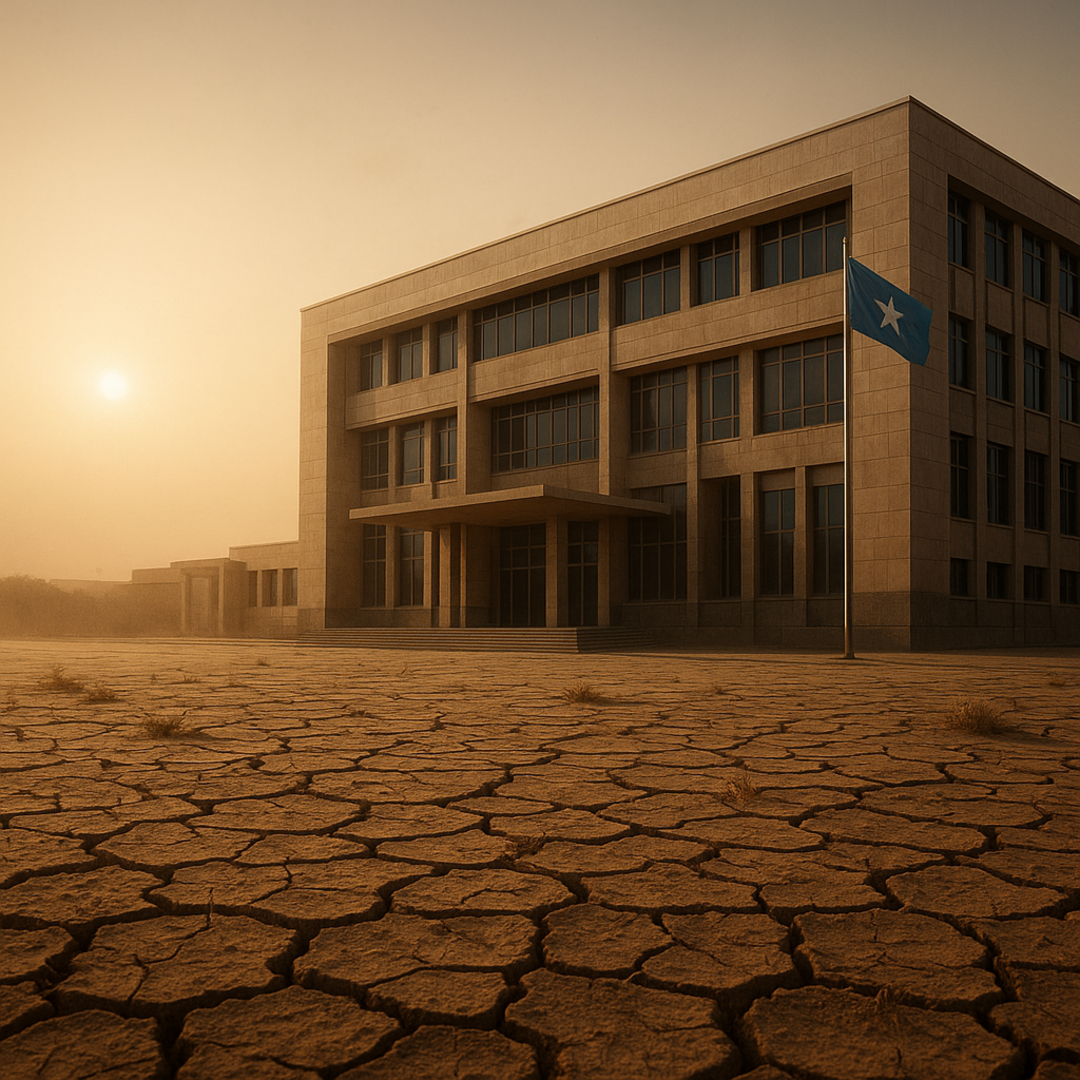
Over 5,000 pastoralist families whose livestock perished during the drought have overwhelmed local authorities in Godinlabe town, central Somalia’s Galgadud region, leaving these families facing dire conditions.
Abdirahman Abdullahi, secretary of the Godinlabe administration, reported that the arrival of numerous new families over the past two months has placed enormous pressure on scarce local resources.
These are newly displaced families escaping the drought from various regions, he explained. Their movement is prompted by the loss of livestock and means of survival, compelling them to relocate near water sources. Many are establishing themselves among already existing displaced populations.
The local administration has tried to organize help but lacks the capacity to address the magnitude of need, the official stated. He cautioned that the situation will deteriorate without immediate assistance.
Families that once sustained themselves through livestock now reside in open spaces surrounding the town, where food, water, shelter, and basic services are in short supply.
Mahmoud Mohamed Jimale, a father of nine, reports his family is confronting hunger, water scarcity, and homelessness since abandoning their village following the death of their animals.
We have spent a month in the open without substantial help. We prepare food once daily, which is insufficient. On some days, we receive nothing, severely impacting the children, he shared.
Minimal food assistance comes from relatives residing in town who are also experiencing financial difficulties. When this support is unavailable, the children suffer from hunger.
Mahmoud relocated his family from Dhisaqa village in Godinlabe district after 50 goats died due to successive failed rains. He anticipated finding casual work or humanitarian aid in town, but neither has emerged.
He traverses Godinlabe town daily in search of food, water, or employment. His relatives can offer little assistance, and job opportunities have vanished as the drought has crippled the local economy, which heavily relies on livestock.
I am capable of working, but there are no jobs available. No construction projects are underway, no sanitation facilities are being developed. People are merely attempting to survive with minimal resources, he stated.
Mahmoud, 45, has lived his entire life as a pastoralist. He describes his family’s current situation as the most challenging they have ever faced. With all livestock lost and no alternative means of support, he feels helpless.
He is also encumbered by debts of $800, built up over two years for livestock feed and household food bought on credit from local vendors. Shopkeepers are demanding repayment, but he has no means to settle these obligations.
His children are experiencing heat-related illnesses after living exposed to the elements without shelter in extreme temperatures. They have been unwell for more than a week, but Mahmoud cannot transport them to healthcare facilities due to financial constraints.
Shafi Ahmed Yassin, with a family of 11, reports he cannot supply adequate food, water, or shelter after a month at Bari camp on Godinlabe’s outskirts. The only assistance they receive is occasional prepared meals from relatives.
The food we obtain is insufficient for such a large family, Shafi stated. On certain days, the children remain hungry, which creates persistent anxiety for me.
Shafi’s family departed from Fadalawayn village, approximately 20 kilometers from Godinlabe, after 30 of their 70 goats perished from insufficient pasture. The remaining 40 animals are critically weakened and neither produce milk nor can be sold for money.
He reports one or two of his remaining goats die daily, as he lacks fodder to sustain them.
If we don’t receive food or rainfall this month, all remaining goats will perish, he warned. This would plunge us into poverty from which I see no escape, as I possess no alternative survival strategies.
Shafi anticipated assistance upon arriving in town but has only received minor contributions from family members. He was compelled to abandon his home and possessions in the village due to lacking transportation to move them.
His children take refuge under a tree at Bari camp with inadequate protection from daytime sun or nighttime cold. Shafi states he possesses no skills beyond pastoralism and has no means to generate income, causing profound concern about his family’s future.
A recent UNHCR report indicates that over 8,000 additional people have been displaced from villages in Adado and Harardhere districts of Galgadud because of failed rains. The report identifies food and water scarcity as the most critical challenges confronting these communities, with insufficient humanitarian aid intensifying the crisis.