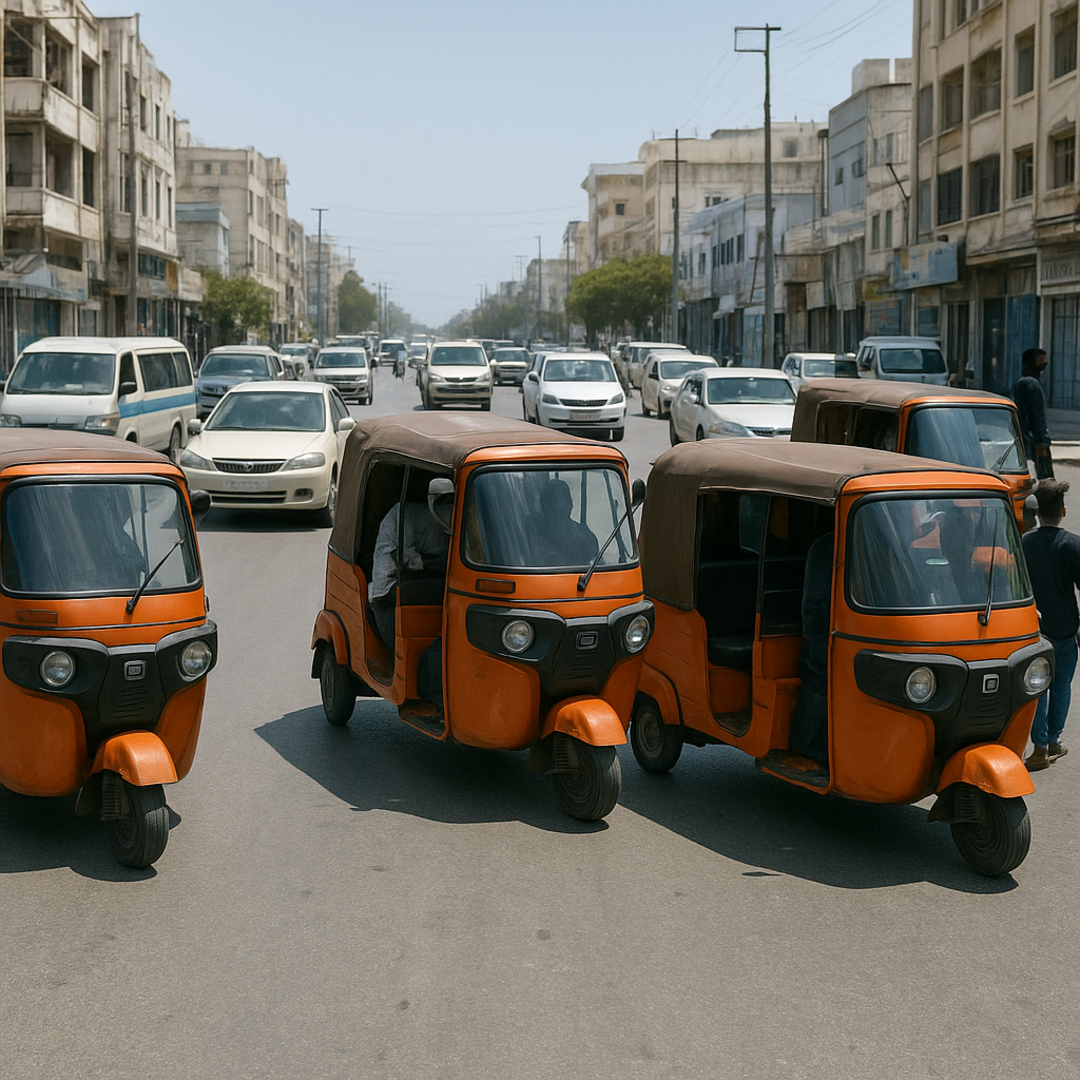
Operators positioned their vehicles across thoroughfares and declined to relocate them, creating a traffic obstruction while attempting to highlight their concerns regarding the surge in fuel costs.
Multiple tuk-tuk operators have been taken into custody in Mogadishu following demonstrations sparked by escalating fuel prices, with frustration mounting among transport workers who claim the hike is impacting their ability to earn a living.
Government officials have not provided justification for the detentions, while opposition factions have condemned the action and demanded the unconditional release of those apprehended.
The protests commenced when numerous tuk-tuk drivers obstructed traffic flow on Maka Al-Mukarama Road, a primary thoroughfare in the city that connects to the presidential palace.
Operators positioned their vehicles across thoroughfares and declined to relocate them, creating a traffic obstruction while attempting to highlight their concerns regarding the surge in fuel costs.
Protest participants indicated that fuel prices have doubled since February 28, following the commencement of airstrikes against Iran by the United States (US) and Israel.
These military actions have heightened tensions in the Gulf region and sparked apprehensions regarding the security of oil shipments passing through the Strait of Hormuz, a critical global oil transportation corridor.
Mogadishu operators report that the global oil price surge has immediately impacted the city due to Somalia’s reliance on imported fuel. Many indicate that increased fuel expenses are making it challenging to maintain their vehicles while keeping fares reasonable for passengers dependent on tuk-tuks for daily commuting.
During the protest, demonstrators also alleged that fuel station proprietors are exploiting the international crisis to implement unwarranted price hikes. Several operators expressed that the market lacks proper oversight and accused officials of neglecting to intervene to resolve the issue.
“The federal government must address this situation. We are encountering serious financial difficulties as fuel costs rise daily,” stated Ali Yare, a tuk-tuk operator, during an interview with AFP.
He explained that fuel distributors are utilizing the Middle Eastern conflict as a pretext to increase prices without regard for the challenges faced by individuals whose livelihoods depend on transportation services.
“The business community is raising prices to profit from the Middle Eastern conflict, showing no consideration for others’ circumstances,” he added.
Operators assembled on Maka Al-Mukarama Road declared they would maintain the road blockade until the government addresses their grievances and tackles the escalating fuel expenses.
“We will not reopen the thoroughfare until our concerns are addressed by the authorities. The price escalation is intolerable,” stated another operator, Yusuf Bare.
Opposition factions also responded to the arrests, with the Somali Future Council denouncing the detentions and demanding the immediate and unconditional liberation of those apprehended. The organization affirmed that peaceful demonstrations represent a legitimate method for citizens to voice concerns regarding economic difficulties.
Mogadishu residents and business owners report that the fuel price hike is already disrupting commercial operations, cautioning that elevated transportation expenses could permeate the broader economy if conditions persist.
Mohamed Cagey, a local shopkeeper, noted that numerous customers have begun expressing dissatisfaction regarding mounting costs. “The higher fuel prices are already impacting the economy, and consumers have started voicing their concerns,” he stated.
He cautioned that the current protest by tuk-tuk operators might indicate broader public discontent if the Middle Eastern conflict persists and fuel costs stay elevated.
“Public transport operators such as tuk-tuk drivers are demonstrating today, but if the conflict with Iran continues, the prices of essential goods will also rise, and additional citizens will join the protests,” he explained.
Transport workers assert they will persist in urging governmental action, contending that without measures to regulate fuel prices, numerous operators may be compelled to suspend their operations, a development they warn would impact both economic sustenance and the daily mobility of capital residents.