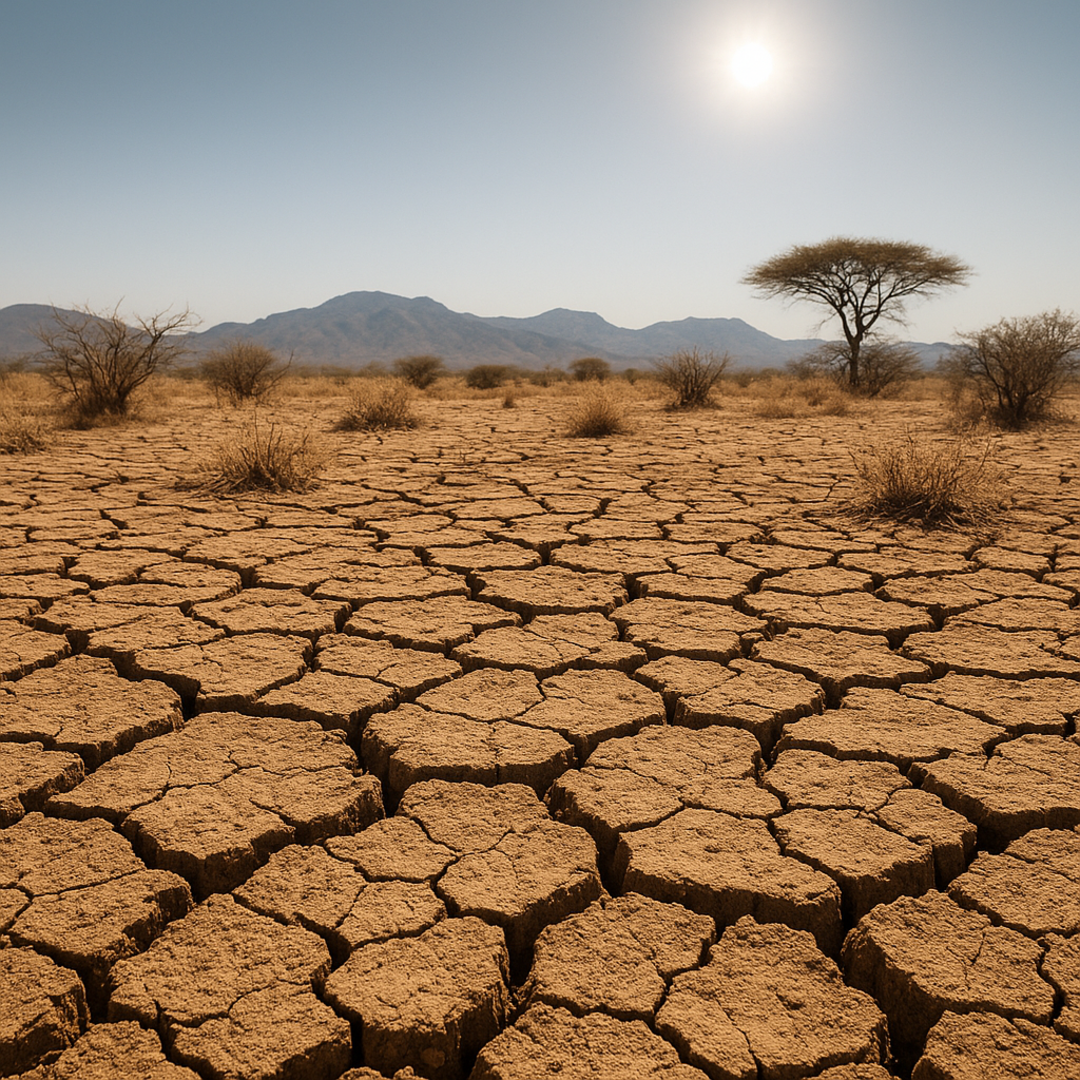
In Gabobe village on the outskirts of Hargeisa, 40 vulnerable families have been left behind as other residents migrated in search of water and pasture after two consecutive years of drought.
The remaining residents consist of elderly individuals, people with disabilities, and households lacking the resources to move. Having lost all their livestock to the drought, they face severe water shortages and hunger.
Sirad Mohamed Elmi, 76, resides in Gabobe with three elderly relatives and her sick son. She described her daily existence as precarious after all their animals died. Her family depends on occasional help from relatives in Hargeisa.
“If fortunate, we manage one meal daily. Previously, we relied on our livestock, selling animals to purchase food and other necessities. Now the drought has wiped out our animals, plunging us into extreme hardship,” she explained.
All manually dug wells in the region have gone dry, forcing residents to fetch water from Ba’ado, located approximately three kilometers away.
Sirad carries a single jerrycan on her back, undertaking the long journey to reach free water distribution points. She describes the trip as exhausting.
“At 76 years old, the distance feels too far. The load is heavy, and I become extremely tired,” she shared. “But I have no alternative. I cannot afford water transported by tankers from Hargeisa.”
Water suppliers charge approximately two dollars per barrel.
Sirad is also burdened by profound personal loss. In the past year, one of her sons died after accidentally falling into a water well. Another son was bitten by a snake in Hargeisa and continues to experience severe pain in his leg.
She lacks the funds to take him to a medical facility and fears he may suffer permanent disability, as she has been informed by those knowledgeable about snake bite consequences.
She also cares for three elderly male relatives who have no families of their own and rely completely on her support.
“They are elderly with no other support. They depend solely on me, and as you can see, I struggle to care for myself,” Sirad stated.
Gabobe has no shops. The nearest store charges high prices, making it challenging for families to purchase even basic food.
“At times, even one or two dollars won’t buy you anything,” she mentioned.
Sirad reports accumulating $300 in debt over the past five months. She has been notified that her credit limit has been reached and no further credit will be extended until her debt is cleared.
Her family has practiced pastoralism for generations, though consecutive failed rainy seasons have killed approximately 100 of their goats due to insufficient pasture, water scarcity, and diseases.
Everyone remaining in Gabobe confronts extreme difficulty. Jamal Mahad Mohamed struggles to provide one meal for his family of ten.
They also depend on food purchased on credit, which they prepare once daily when feasible. Jamal mentions owing shopkeepers approximately $500.
“Those I owe money warn me repeatedly,” he shared. “Necessity compels me to beg them, promising repayment when the rains arrive. It’s extremely difficult to obtain even food for us to cook.”
Jamal has frequently traveled to Hargeisa, twenty kilometers away, seeking casual employment without success.
“There are fewer employment opportunities now, and I have no connections in the city who might assist,” he explained.
Two of his children had to leave Koranic school. The institution closed after most families departed.
Jamal states he could not afford the $200 per household required for transportation to relocate.
“Others left because they had vehicles and financial means,” he noted. “We remained behind due to lacking both.”
Since mid-2024, the region has experienced no rainfall. Of his 80 animalscamels and goats30 have perished due to drought. The remaining 50 yield no milk, cannot be sold, and lack grazing land.
“I couldn’t purchase feed, and there was no grazing available,” he mentioned. “If rain doesn’t arrive soon, I fear all will perish.”
The deputy chairperson of Gabobe village, Faisa Yusuf Arale, reported that the circumstances for those remaining were exceptionally severe.
“Forty families, including elderly individuals and people with disabilities, still reside here,” she explained. “They lack food, water, pasture, healthcare facilities, and road access. Their livestock has perished, and the few surviving animals are succumbing to hunger and thirst.”
She indicated that the village administration lacks financial resources to address the crisis and has reported the conditions to the Somaliland government and humanitarian groups, requesting immediate aid.